
Luke 11:29-54 [Matthew 12:38–45]
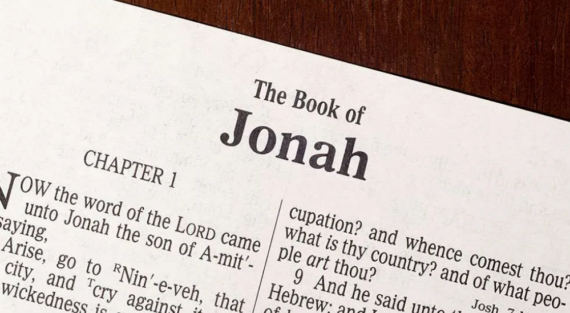
We should be careful of calling someone or something a “type” unless the Bible does so. At times a parallel is drawn without using the language of “type and antitype.” Such is the case with Jesus and Jonah. There are both similarities and differences. Let us learn both from the similarities and the differences.
Delivered from death






Both were delivered from death. There were differences, of course. Jesus was delivered from actual death. Jonah from potential death. Jesus’ death was undeserved. Jonah deserved to die. Those who tossed Jonah overboard did not want to do so. Those who killed Jesus did so willingly.
Perhaps the similarity between Jonah and Jesus is slight compared to the differences. But even slight things may be significant (Matthew 12:40).
Choice
Both preached a choice between repentance and judgment. This choice, rather than the resurrection prediction, receives the emphasis.
Again, there are differences. Jonah preached the possibility of repentance and forgiveness unwillingly. Jonah seemed to prefer to preach only judgment. In his recorded preaching, he does not seem to hold out any hope. The people of Nineveh repented. But Jonah does not seem to have encouraged it.1 Jesus preached repentance willingly and held out hope for those who would repent (Luke 5:32; 15:7,10).
But, of course, Jesus also preached that there would be judgment if there was not repentance (Luke 13:1-9). It may be popular to picture Jesus as having only a positive message with no demands and no threat. But that is simply dishonest. It is far from the whole truth.
Included non-Israelites.
Both included non-Israelites. Again, Jesus did this willingly. Jonah did it unwillingly (Jonah 1:2–3; 3:10–4:1). Both Matthew and Luke emphasize the universal nature of Jesus’ appeal by linking the mention of the men of Nineveh with the coming of the “Queen of the South” (Matthew 12:41–42; Luke 11:30–31).
The message
The message of the Jonah-Jesus three days in the grave comparison is this:
First, Christianity is about life from the dead. It is about Jesus being resurrected from an undeserved death. It about the servants of the Lord (like Jonah) being delivered from the death they deserve.
Secondly, the message of Christ has to do with a choice between repentance and judgment. Not that our repentance makes us deserving, but it shows that we really believe the message.
Thirdly, everyone is to be given this message. We should give the message to people like us and to people unlike us. We should share the message with people we like and with people we may not like.
Connections
Matthew follows the discussion of Jonah with the story of the person who is cleansed of a demon only to have several demons return (Matthew 12:43-45). Luke had covered that saying right before the part about Jonah (Luke 11:24ff). Luke follows the mention of Jonah with a brief statement about making proper use of the light given to us (Luke 11:33-36). He then continues with an event at a meal, where Jesus does not engage in the ceremonial washing that was so important to the Pharisees (Luke 11:37-54).
All of these seem to be thematically connected to the Jonah statement. Jonah knew the truth about the Lord. He could even preach it, but he failed to live by it. Jonah derived no benefit from what he knew of the Lord. The person freed from a demon who does not fill his life with good, will find himself repossessed by demons. The person who has a light, but puts it under a basket, is wasting what he has.
Jonah did not want to associate with non-Israelites. He wanted them to perish. The Pharisees did not wash for hygienic reasons. Their “washings” involved no soap and sometimes little water. They washed to show their disdain for Gentiles, women, and less scrupulous Jews.
There is no Mosaic law for this. The priests were to wash before their temple duties (Exodus 30:19-21). But there was no law that an ordinary person eating a normal meal should wash. Jesus is not rejecting hygiene or the Mosaic law. He is rejecting an attitude of superiority. That attitude might be expressed as “the belief that spiritual danger comes to us by inadvertent contact with inferior beings in the course of daily life.” This attitude had become central to the Pharisees, and to their scribes.
There are many things wrong with this attitude. It was an insult to Gentiles and women. It was a constant reminder to a Pharisee of his self-assumed superiority to others. And it took attention off the things that mattered most in our relationship with God.
The “things that matter most” are short-listed in various ways in scripture. Jesus uses just two terms (“justice and the love of God”) on this occasion (Luke 11:42). He used three (justice, mercy, and faithfulness) in Matthew 23:23. On another occasion he states it differently (Matthew 22:37–40), but with essentially the same meaning. Other scriptures give the “things that matter most” list in various ways (Micah 6:6–8; Amos 5:21–24; 1 Corinthians 6:9–11, 19–20; Galatians 5:18–21, 22–24).
Of course, salvation is no more by keeping the short list than it is by keeping a much longer list. We ought to give attention to justice and the love of God, but we will not thereby save our souls. This is not a passage about how to be saved. It is a warning against a works salvation that emphasizes minor things and will destroy us.
When it comes to an issue like this, Jesus is not afraid to give offense. In fact, he seems to have sought to upset them (Luke 11:37–38, 45ff). Jesus would at times go out of his way to get along with others (Matthew 17:24ff). But on other occasions he sought controversy (Mark 3:1–6).
Why the difference? Paying the tax mentioned in Matthew 17 did not seriously misrepresent God. That tax was not destroying souls. But practices that said, “I am better than you,” or “this person does not matter,” are soul destroying practices. The idea that we might wash off sin’s defilement by dipping our hands in water was a God denying and soul-destroying idea.
The lessons
The lessons are clear.
We are “not to neglect” the ceremonial aspects of the faith (42), but ceremonies will not make us right while we refuse to repent. We are not defiled by incidental contact. But we are defiled when we disregard justice and the love of God.
Justice means treating others right. It means no cheating, no keeping what is owed, no oppressing of the weak, no gossiping. For the believer it means doing for others what we would have done to us (Matthew 7:12). It includes the mercy mentioned in the Matthew 23 short-list.
The love of God is much more than a warm feeling. The love of God is a compelling appreciation of what he has done for us (2 Corinthians 5:14). The love of God will lead to obedience to his instructions (John 14:15; 1 John 5:3; 2 John 1:6). It thus includes the faithfulness of the Matthew 23 list. Love of God will lead us to teach only what he taught and to honour his worship commands (Matthew 15:9). Disobedience is the antithesis of loving. It is crucifying Jesus all over again (Hebrews 6:6). Trying to run from his instruction, as Jonah did, shows our faith to be a dead faith, no matter how well we may state the faith with our lips.
Those who gossip about or cheat others, those who refuse to share the message with others, are sinning. Showing up for worship, or washing our hands before a meal, does not absolve us. Yes, we should worship. But the value of that worship is canceled when we willingly live unholy lives. A faith that does no good to others, or a faith that disobeys God is a dead faith.
There is the three day comparison between Jesus and Jonah. But there is plenty of contrast between the two. Jesus is not seeking more narrow, nationalistic servants like Jonah. The priorities of Jonah are radically different from those of Jesus. Followers of Jesus should exemplify justice and the love of God, not the tribalism Jonah practiced.
Eswatini, Africa
1 Jonah 3:4-9 “Jonah began to go into the city, going a day’s journey. And he called out, ‘Yet forty days, and Nineveh shall be overthrown!’ 5 And the people of Nineveh believed God. They called for a fast and put on sackcloth, from the greatest of them to the least of them. 6 The word reached the king of Nineveh, and he arose from his throne, removed his robe, covered himself with sackcloth, and sat in ashes. 7 And he issued a proclamation and published through Nineveh, ‘By the decree of the king and his nobles: Let neither man nor beast, herd nor flock, taste anything. Let them not feed or drink water, 8 but let man and beast be covered with sackcloth, and let them call out mightily to God. Let everyone turn from his evil way and from the violence that is in his hands. 9 Who knows? God may turn and relent and turn from his fierce anger, so that we may not perish.’”