
The Book of Revelation is the culmination and completion of God’s inspired and written self-disclosure over thousands of years of history and writing of Scripture. Looking over the long span of the Bible, we see Jesus is the Spiritual Rock of the Old Testament and the invisible caring Creator. In the Gospels, Christ the Messiah comes in the flesh, incarnate, teaching, preaching, healing, compassionate, crucified and risen. In Acts and the letters we see Jesus the risen Lord working through His people. In Revelation we see Christ the eternal ruling Victor and Sovereign, “Lord of lords, King of kings,” (17:14; 19:16), “the bright morning star” (22:16). With God the Father, He is the eternal light of His people (21:23–25; 22:5).
Jesus says at the beginning and ending, “I am the Alpha and the Omega* . . . the first and the last, the beginning and the end” (1:8; 22:13; i.e. *A-Z in English). He is “the faithful witness, the first born of the dead, and the ruler of the kings of the earth” (1:5). John is the first writer to identify Jesus as The Lamb of God (John 1:29, 36). John calls Him the “the Lamb” (about 31 of 39 New Testament occurrences) thus saturating Revelation with the essence of the gospel, Jesus’ sacrificial death, burial and resurrection.
Jesus, the Lamb, is central in Revelation from chapter 5 to 22. He is the perfect sacrifice. He is worthy: “And they sang a new song, saying, ‘Worthy are You to take the book and to break its seals; for You were slain, and purchased for God with Your blood men from every tribe and tongue and people and nation….Worthy is the Lamb that was slain to receive power and riches and wisdom and might and honor and glory and blessing’” (5:9, 12).




Throughout Revelation Jesus speaks to His people, opens the sealed book, breaks the seals, stands on Mount Zion, rules over nations, judges, punishes the enemies of God, oversees the consummation of history and with God receives the thunderous praise of multitudes: “as the sound of many waters and as the sound of mighty peals of thunder” (19:6).
Visions of Jesus
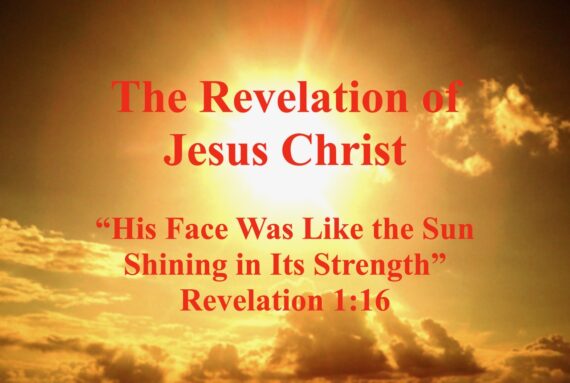
To strengthen the faith of early Christians living in cultures saturated with alluring visual images of idols and fleshly temptations, God gives a powerful vision of Jesus in Revelation as the victorious Lord of heaven and earth. For first-century Christians familiar with Exodus and Roman military rule Revelation gives them a head-to-toe vision, with sound, of the all-powerful victorious Christ, their High Priest, who has ultimate rule and victory over all who threaten His people: John saw Him as “one like a son of man, clothed in a robe reaching to the feet, and girded across His chest with a golden sash. His head and His hair were white like white wool, like snow; and His eyes were like a flame of fire. His feet were like burnished bronze, when it has been made to glow in a furnace, and His voice was like the sound of many waters. In His right hand He held seven stars, and out of His mouth came a sharp two-edged sword; and His face was like the sun shining in its strength….” (1:12–16).
John records His vision of Jesus in Revelation 19: “And I saw heaven opened, and behold, a white horse, and He who sat on it is called Faithful and True, and in righteousness He judges and wages war. His eyes are a flame of fire, and on His head are many diadems; and He has a name written on Him which no one knows except Himself. He is clothed with a robe dipped in blood, and His name is called The Word of God. And the armies which are in heaven, clothed in fine linen, white and clean, were following Him on white horses. From His mouth comes a sharp sword, so that with it He may strike down the nations, and He will rule them with a rod of iron; and He treads the wine press of the fierce wrath of God, the Almighty. And on His robe and on His thigh He has a name written, ‘KING OF KINGS, AND LORD OF LORDS’” (1:13-16; 19:11-16). The first and most fitting responses to these awe-inspiring visions is worship and obedience.
Revelation Worship
In Revelation, John describes many dimensions of worship. He talks about worship’s posture, praise, purpose, people, power, perils of its alternatives, and, above all, God the Father and Lamb of God and the reasons we worship Him.
The posture of God’s worshipers is among the first thing we see. They fall down before Him. John uses the verb proskuneow most often for worship. It means to fall down to worship, to do obeisance (gesture expressing reverence), to move the body in respect and submission, bowing to acknowledge God and His superiority. Several times we see elders, angels and four marvelous living creatures falling down before God and the Lamb in worship (4:10; 5:8, 14; 7:11; 11:16; 19:4). The elders cast their crowns before God’s throne (4:10). John falls before Jesus and His angel (1:17; 19:10; 22:8-9).
We hear their thundering praises to God in worship: “Holy, holy, holy is the Lord God, the Almighty, who was and who is and who is to come… Worthy are You, our Lord and our God, to receive glory and honor and power; for You created all things, and because of Your will they existed, and were created” (4:8, 11); “Then I heard something like the voice of a great multitude and like the sound of many waters and like the sound of mighty peals of thunder, saying, ‘Hallelujah! For the Lord our God, the Almighty, reigns’” (19:6b).
Revelation enlarges our vision of those with whom we will be worshiping God eternally. Revelation worshipers include the angels (7:11), the twenty-four elders (4:10; 5:8; 11:16;19:4), the four living creatures (5:14; 19:4), the great multitude (17:9; 19:1-6), God’s bond-servants (19:5), the Apostle John (19:10; 22:8-9) and all the patriarchs, prophets, apostles and saints of the ages (21:12, 14; see also Hebrews 11; 12:22-24).
Revelation paints pictures that place the worship of God in vivid contrast to the worship of angels, idols, the devil and the beast and his image. Revelation weaves pictures of the worship of God alternating against false worship in this order where A is God: ABACACACADCDA: A) God (1:17; 4:10; 5:14; 7:11), B) demons and idols (9:20), A) God (11:1, 16), C) the dragon and the beast (13:4, 8, 12, 15), A) God (14:7), C) the beast and his image (14:9, 11), A) God (15:4), C) the beast and his image (16:2), A) God (19:4-6), D) the angel 19:10, D) the beast and his image 19:20, 20:4, D) the angel (22:8), and A) God (22:9).
God, our Creator and Redeemer, is worthy of worship because He reigns: “Hallelujah! For the Lord our God, the Almighty, reigns” (19:6b). Hallelujah literally means praise Yahweh, praise the Lord. Revelation uses it four times in triumphant and joyful succession. Revelation is the only New Testament book employing this beautiful word (19:1–6). In His sovereign reign, the Lord also judges, protects and avenges (19:2).
The Structure of Revelation and Features of Apocalypses
Revelation is an apocalypse, Greek for “revelation.” Apocalyptic writings have many unique features discussed briefly below.
Revelation also has many features of a Greco-Roman letter. It also includes seven letters Jesus dictated for His churches in the Roman province of Asia. His letters have several characteristic features:
1. Salutation (greeting), instructions, a vision of Jesus often related to John’s vision of Him in 1:12–16
2. Encouraging commendations
3. Convicting rebukes (except for Smyrna and Philadelphia)
4. Commands to repent and correct (except for Smyrna and Philadelphia)
5. Consequences of not obeying Jesus’ commands
6. Further positive commendations
7. Commands to hear what the Spirit says
8. Positive promises to those who overcome
Here are three suggested ways to view the overarching structure of Revelation.
Most simply, perhaps too simply, is the suggestion that:
Chapters 1 to 11 describe the battle God and His people face on earth
Chapters 12–22 the heavenly battle behind the scenes and God’s ultimate victory
More detail is helpful:
1 The Revelation and Vision of Jesus, His Salvation and Purpose
2–3 Jesus’ Letters of Correction and Direction for His People
4–5 The Worship of God in Heaven and the Lamb Who Is Worthy
6–20 The Four-fold Defeat of God’s Enemies and Vindication of His People
19 The Four-fold Hallelujah and Marriage Supper of the Lamb
20 The Millennium and Judgment
21–22 The New Heaven, New Earth and New Jerusalem, Jesus’ Coming Again
Thirdly, a more detailed outline:
1:1–8 The Revelation of Jesus, His Salvation and Purpose for His people
1:9–20 John’s Vision of Jesus and His Words to John
2–3 Jesus’ Letters to His Seven Assemblies (Churches)
4–5 Visions of Heaven, God, Jesus the Lamb and the Heavenly Host
6:1–8:5 Seven Seals Open to Bring God’s Judgment and Punishment
8:6–11:19 Seven Trumpets: Earth’s Destruction, Satan’s Release, Christ’s Reign
12–14 Heavenly Conflict behind the Conflict on Earth
15–16 Seven Bowls of God’s Wrath
17–19 Fall of Babylon (Rome) and Victory Hallelujahs in Praise of God
20 The Millennium and Judgment
21–21:5 The New Heaven, New Earth, New Jerusalem
22:6–21 Jesus’ Final Words: Heed this Prophecy, I Am Coming Quickly
Apocalyptic writing has many unique features. It often deals with themes of historical events or otherworldly journeys. Some of the major parts of apocalyptic writings are cosmology (the origin and fate of the universe), primordial events (at the beginning of time), reconciliation of past problems, persecution, upheavals in the last days, judgment, destruction, cosmic transformation, resurrection, afterlife and ex eventu prophecy (prophecies that appear future to the leading figure[s] in the apocalypse but past to the current earthly writer and readers as the ancestry and birth of Jesus in Revelation 12). The general hope of the writers is that positive cosmic forces from another world will correct ethical wrongs and injustices in this one, thus making God’s worldview triumphant.
God sends apocalyptic communication through visions, dreams, special messages and signs, notably the sign of the Son of Man and the breath of His mouth. Trumpets frequently sound to announce messages and cataclysmic events. There are unique and archetypal elements: the fountain of David, swords, plagues, and golden bowls. God speaks through angels. He addresses the churches by seven spirits and letters.
Apocalyptic sounds in Revelation include songs of praise, the song of Moses, many waters, thunder and voices from the throne. Seven is a common number and organizing principle in Revelation: seven spirits, seven churches, seven angels, seven plagues, seven peals of thunder, and seven bowls. God uses powerful creative media.
The recipients of God’s apocalypses include their earthly authors, chosen disciples, Israel, the church and the world at large. The revelations impact their recipients directly such as John’s posture of worship.
Apocalyptic writings are pessimistic about the present age but optimistic concerning the age to come. They may allude to mythology and employ numerology and animal symbolism. They have a unified view of history moving towards a comprehensive end/new beginning focusing on life after death and the resurrection of all: the wicked and the righteous, punishment and reward. Apocalyptics call for higher ethics and moral behaviour now to prepare for eternal life contrasting the present evil age and the positive coming age (eschatological / eschaton).
Blessed is the One Who Reads, Hears and Observes What Is Written
First-century Christians in Asia Minor facing persecution and very tough times may well have asked when and how would God help them? John wrote Revelation in part to answer them. From exile on the Island of Patmos, he recorded Jesus’ descriptions of the churches’ tough challenges: evil men, false apostles (2:2), tribulation, poverty, blasphemy, imprisonment, death (2:9-10, 13), dwelling where Satan’s throne is (2:13), false teachers of Balaam, Barak, the Nicolaitans, Jezebel and Satan’s deep things (2:14, 15, 20, 24), immorality, idolatry (2:20), apathy and materialism (3:16-17). God gave Revelation’s readers what they needed: guidance, correction, exhortation to prepare for Jesus’ coming again and encouragement that He is present now, active and victorious.
Revelation Blessings
Revelation opens and ends with promises of blessings amidst difficulties. Jesus opens His first sermon in Matthew and closes Revelation with blessings. Makarios (blessed) appears in Jesus’ Sermon on the Mount nine times and in His Revelation seven times (the most in the New Testament outside the Gospels).
“Blessed is he who reads and those who hear the words of the prophecy, and heed the things which are written in it; for the time is near” (1:3).
“And I heard a voice from heaven, saying, ‘Write, Blessed are the dead who die in the Lord from now on!’ ‘Yes,’ says the Spirit, ‘so that they may rest from their labours, for their deeds follow with them’” (14:13).
“Behold, I am coming like a thief. Blessed is the one who stays awake and keeps his clothes, so that he will not walk about naked and men will not see his shame”(16:15).
“Then he said to me, ‘Write, Blessed are those who are invited to the marriage supper of the Lamb’” (19:9a).
“Blessed and holy is the one who has a part in the first resurrection; over these the second death has no power, but they will be priests of God and of Christ and will reign with Him for a thousand years” (20:6).
“And behold, I am coming quickly. Blessed is he who heeds the words of the prophecy of this book” (22:7).
“Blessed are those who wash their robes, so that they may have the right to the tree of life, and may enter by the gates into the city” (22:14).
Promises for Those Who Conquer
In His letters, Jesus makes seven promises to those Christians who overcome and endure to the end. Those for those who overcome:
1) “I will grant to eat of the tree of life, which is in the Paradise of God” (2:7, Ephesus).
2) “shall not be hurt by the second death” (2:11, Smyrna).
3) “I will give some of the hidden manna, and I will give him a white stone, and a new name written on the stone which no one knows but he who receives it” (2:17, Pergamum).
4) “I will give authority over the nations and he shall rule them with a rod of iron, as the vessel of the potter are broken to pieces…I will give him the morning star” (2:27–28, Thyatira).
5) “shall thus be clothed in white garments; and I will not erase his name from the book of life, and I will confess his name before My Father, and before His angels” (3:5, Sardis).
6) “I will make him a pillar in the temple of My God, and he will not go out from it anymore; and I will write upon him the name of My God, and the name of the city of My God, the new Jerusalem, which comes down out of heaven from My God, and My new name” (3:12, Philadelphia).
7) “I will grant to him to sit down with Me on My throne, as I also overcame and sat down with My Father on His throne” (3:21, Laodicea).
Get Ready
At its core Biblical apocalyptic writing is about God and the consequences and triumph of His way of living in time and eternity. He is the main character and focal point. In Revelation, the Father and the Spirit focus attention on Jesus, the Lamb. The final Biblical Apocalypse speaks of the future but calls for action now in repentance, steadfastness in faith, high moral Christ-like conduct and proclamation of the gospel.
The New Testament church lives in front of a horizon of glory and expectation about our future hope. God is victorious and triumphant over evil, injustice and death. He will bring “new heavens and a new earth, in which righteousness dwells”(2 Peter 3:13). This horizon is clearly visible from Matthew 3:12 to Revelation 22 and in many Old Testament passages.
God means for His apocalyptic words to have a positive impact on how we live right now. Yes, we are preparing for a cataclysm, not by stockpiling supplies and buying underground shelters, but by purifying our hearts, loving God and each other, proclaiming the gospel and doing the works He has prepared for us (Ephesians 2:10). We will be able to stand before Him on the great day with confidence because of what Jesus has done for us through His death, burial, resurrection and being Lord of our lives.
For further reading, listening and resources:
http://paulbirston.com/articles/RevelationofJesusChrist.html
http://paulbirston.com/articles/ApocalypticsNow-Part1.html
http://paulbirston.com/articles/ApocalypticsNow-Part2.html
http://paulbirston.com/articles/RevelationBlessings.html
http://paulbirston.com/articles/RevelationWorship.html
31 Sermons from Revelation 1–22 including videos, reading, other resources, welcome, introduction and instructions: