
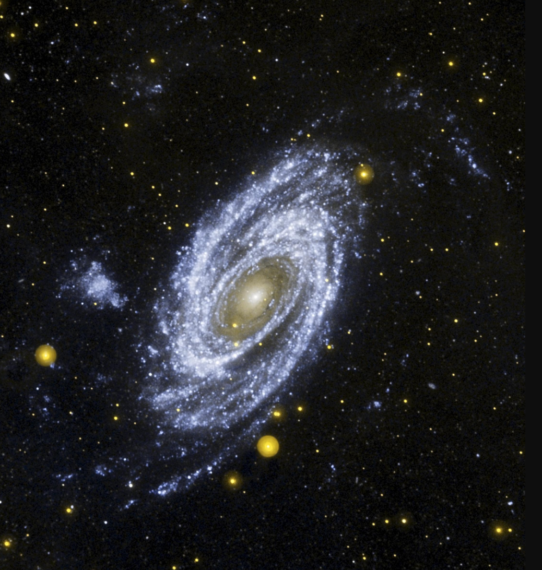
The Bible presents a simple yet profound argument concerning the origin of the universe. It does not begin by asking questions about God’s nature. It begins with the created order itself.
The writer of Hebrews declares, “For every house is built by someone, but the builder of all things is God.” (Hebrews 3:4)
The logic is straightforward. A house points to a builder because houses do not build themselves. The existence of the house bears witness to the existence of the one who built it. The inspired writer then extends the same reasoning to the universe: if every house has a builder, then the created order points beyond itself to its Creator.






Paul develops the same line of reasoning: “For since the creation of the world His invisible attributes, namely, His eternal power and divine nature, have been clearly seen, being understood from what has been made.” (Romans 1:20)
Creation reveals its Creator. Paul reasons from the visible world to the invisible God. The universe is not presented as its own explanation but as evidence pointing beyond itself to the One who made it. This is the biblical creation argument. It is an argument from effect to cause. The existence of creation bears witness to the existence of its Creator.
At this point, a familiar objection is often raised: “Who created God?” Many assume this question refutes the biblical claim. Yet it does not. It simply introduces a different question.
The biblical proposition is: The universe was created. The objection asks: Who created the Creator?
Those are not the same proposition. The second question does not refute the first. It shifts the discussion from the origin of the universe to the origin of the proposed Creator. A change of subject is not a refutation.
A simple illustration makes this clear. Suppose a carpenter builds a table. If someone asks, “Who made the carpenter?” that question does not alter the fact that the carpenter built the table. The carpenter’s own origin is a separate question from the origin of the table. Asking about the carpenter does not explain the table, nor does it refute the claim that the carpenter built it.
Likewise, asking, “Who created God?” does not explain the existence of the universe, nor does it demonstrate that the universe created itself. It merely requests another level of explanation. The original claim—that the universe has a Creator—still stands and must be examined on its own merits.
Only after establishing God as the Creator does Scripture reveal His nature: “Have you not known? Have you not heard? The LORD is the everlasting God, the Creator of the ends of the earth.” (Isaiah 40:28)
Notice the biblical order. Scripture first points to creation as evidence of a Creator. Then it reveals who that Creator is. The Creator is not presented as another created being within the universe but as the everlasting God. Therefore, the biblical claim that the universe was created still stands. From the day it was first proclaimed until this very day, it has not been refuted by the question, “Who created God?” That question raises a separate issue concerning the nature of the Creator, but it does not disprove the original claim that the universe has a Creator. The biblical proposition remains intact until it is directly refuted on its own merits. Simply changing the subject does not accomplish that.
The creation argument, therefore, remains exactly where the biblical writers placed it: creation bears witness to its Creator. Anyone who wishes to reject that conclusion must address the argument itself rather than replace it with a different question.
Sault Ste. Marie, ON