
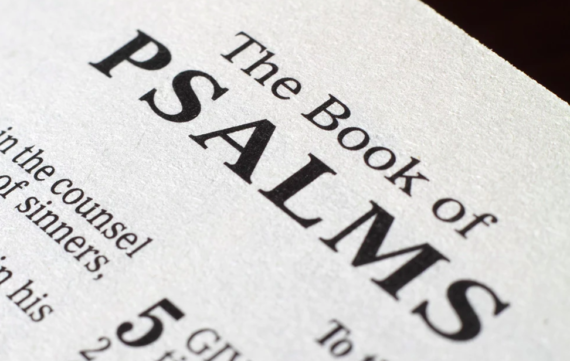
The fourth book in the Psalter does not contain as many headings as the other books.Those we do see here are of questionable use in understanding the psalms.We do best to take the inspired text at face value, without recourse to guessing the exact situation of the writer, with or without the help (or hindrance) of the headings.
This psalm is a reflection on the contrast between human mortality and God’s eternity.There are no enemies here, nor disasters to endure, just the question of our mortality. God is forever (“from everlasting to everlasting you are God” 2). We are short-lived (“The years of our life are seventy, or even by reason of strength eighty; yet their span is but toil and trouble; they are soon gone, and we fly away” 10).
Time is very different for him than for us (“For a thousand years in your sight are but as yesterday when it is past, or as a watch in the night” 4).Our mortality is the result of sin and God’s judgment on it (“For we are brought to an end by your anger; by your wrath we are dismayed. You have set our iniquities before you, our secret sins in the light of your presence” 7-8).






Such reflection could lead in different directions.Some find it depressing to reflect on human mortality, the fact that we are all terminal.But there is no evidence of discouragement in the tone of this writer. The facts presented in this psalm are not depressing at all.The writer seems to take comfort in the fact that, although we are “soon gone” (10) God is our dwelling, and he is eternal (1).There is even comfort in the fact that our death comes from God’s hand because of our sin. It is not an accident of blind chance. Our death is controlled by an all-wise and all-powerful God.
The writer makes two requests of God.
He says, “Grant us wisdom” (12-13).
Wisdom should come from meditation on the matters mentioned here.If what we do were of no consequence, it would not matter if we did it well or poorly, wisely or foolishly, righteously or sinfully.The fact that God takes action against our sin (8) invests our lives with meaning. Our lives have significance, otherwise our sins would be of no consequence.
Denial of sin’s significance leads, inevitably, to a sense of pointlessness.A denial of sin leads to mental problems. Karl Menninger, a psychiatrist and in no sense a Christian, wrote the book Whatever Became of Sin? The main premise of the book is that the denial of sin inevitably leads to an increase in mental illness, for it makes human life utterly meaningless.
We are here for just a short time, yet we are of consequence to the eternal God. There is a double need for wisdom.With short days and high stakes, the need for wisdom is all the greater.This psalm does not outline a plan for gaining wisdom, it merely asks for it from God.
He also says, “Pity us.”
We do not always grow in wisdom, and so we need God’s pity. We need it primarily in two ways.
God is asked to show pity by showing us his work (16).We can endure a lot, risk a lot, if we know that the end goal is worthwhile and is achievable. If we know that he is in this with us, and if we trust his wisdom and ability, we are much better equipped to face discouraging circumstances.
God is asked to pity us by granting that our work be not in vain (17).The curse of sin is that it renders our work ineffective (Gen 3:17-19; 4:12).Again, this is the cry for significance, a cry made acute by the denial of sin and amplified by the seemingly insignificant nature of so much of our labour.
We are not going to live very long. That is frustrating, even frightening, because we have not accomplished much. The world tells us that we do not really matter much, that our actions are not significant. But God is eternal. God says our actions are significant to HIM. If our actions are of significance to the eternal God, then we are significant. It matters what we do and even what we think.
Let us live our lives confident that there is significance in what we do; and praying that the Lord will intervene to establish the work of our hands. Let us not waste our significance on insignificant matters. Let us rather redeem the time by living wisely.