
Introduction
Christ’s repeated acts on the Sabbath—healing the sick, forgiving sins, and performing miracles—were not incidental moments of compassion but deliberate demonstrations of divine truth. They revealed that the righteousness of God did not proceed from the Law, nor was it confined within the ceremonial observance of the Sabbath. In fact, through these very acts, Jesus was disclosing that the Sabbath itself had already become obsolete, for God had never ceased from His redemptive work.
The statement of Jesus, “My Father works until now, and I am working” (John 5:17), unveils the theological foundation for this reality. The Sabbath could not be absolute, because God Himself had not yet entered true rest. The Father’s work of spiritual creation—restoring righteousness in humanity—was still ongoing, manifested through the miracles and mercy of Christ. The Sabbath, therefore, found its true fulfillment not in weekly cessation from labor, but in the completed work of redemption at the cross.






1. God’s Rest in Genesis: Completion of the Physical, Not the Spiritual
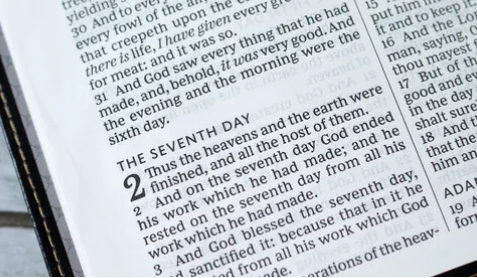
In Genesis, God “rested on the seventh day from all His work which He had done” (Genesis 2:2). This rest was the completion of the physical creation—the heavens, the earth, and the physical human being. It marked the end of God’s work in forming the material world. Therefore, the rest of the Sabbath was likewise physical, corresponding to the physical creation. It was not a spiritual rest but a ceremonial observance, a temporal sign that symbolized the cessation of physical labor.
Yet this rest did not mark the end of all divine activity. God’s ultimate purpose was not merely to create a physical world but to form a righteous humanity bearing His spiritual image (cf. Genesis 1:26–27). When sin entered the world, this higher purpose was interrupted, and humanity fell from righteousness. Thus, while God rested from physical creation, He did not rest from His greater work—the creation of spiritual life in humanity.
From that point onward, God continued to work—not by creating new matter, but by re-creating man spiritually, guiding history toward redemption. The Sabbath of Genesis therefore foreshadowed a rest that was incomplete and unfulfilled—a physical sign pointing toward a future spiritual reality. The true Sabbath, the rest of God’s completed righteousness, would not be realized until the work of salvation was accomplished through Christ.
Consequently, there is no point in the continued observance of the Sabbath under the new covenant, for to do so would place the finished work of Christ back under the shadow of the old. If the Sabbath continues as an obligation, then Christ’s work remains under the symbol rather than the substance. The physical Sabbath pointed to a rest not yet attained; but in Christ, that rest has come. To return to the shadow is to deny the reality it anticipated.
2. The Sabbath as a Covenant Sign
For Israel, the Sabbath became the sign of their covenant with God (Exodus 31:13–17). It marked them as a people set apart to rest from labor and to consecrate the day to the Lord. Yet the Law that established this rest could not restore righteousness, for “by the works of the Law no flesh will be justified” (Romans 3:20).
The Sabbath, like the sacrifices, was therefore symbolic—a temporal sign pointing toward a future reality. When Christ came, He embodied that reality. His actions on the Sabbath did not merely reinterpret the Law; they transcended it, revealing that righteousness and rest are found only in union with Him.
3. Christ’s Intentional Acts on the Sabbath
Throughout His ministry, Jesus acted with deliberate purpose on the Sabbath. His miracles were not accidents of timing but divine statements that the old order was passing away.
- Healing the man with the withered hand (Mark 3:1–6): Jesus called the man forward in the synagogue, confronting the Pharisees’ rigid interpretation of rest. By restoring the man’s hand, He revealed that the Sabbath is not the absence of work, but the presence of God’s mercy.
- Healing the paralytic at the Pool of Bethesda (John 5:1–18): Jesus commanded the man to “take up your bed and walk,” an explicit violation of Sabbath restriction. When accused, He replied, “My Father works until now, and I am working.” This statement identified His actions with the ongoing creative work of God, thereby redefining the Sabbath in divine rather than legal terms.
- Healing the man born blind (John 9): Jesus made clay from His saliva and anointed the man’s eyes, again a forbidden act on the Sabbath. This was not rebellion but revelation. Just as God formed Adam from the dust, Jesus’ act of giving sight was an act of new creation, showing that He was restoring spiritual sight to humanity blinded by sin.
- The disciples plucking grain (Matthew 12:1–8): When the Pharisees objected, Jesus cited David’s precedent and concluded, “The Son of Man is Lord of the Sabbath.” In this, He declared His sovereign authority not only to interpret the Sabbath but to fulfill and replace it entirely.
Through these intentional works, Jesus demonstrated that the Law’s symbolic forms had reached their end in Him. The Sabbath’s rest was being replaced by God’s redemptive activity—the creation of righteousness in the human heart.
4. The Father’s Ongoing Creative Work
Jesus’ miracles were never independent displays of divine power. He consistently attributed them to the Father:
“The Son can do nothing of Himself, but what He sees the Father do” (John 5:19).
This unity reveals that the miracles of Christ were visible expressions of the Father’s ongoing creative work. While God had rested from physical creation, He had not ceased from His spiritual creation—the formation of righteousness in humanity. Every healing, every act of forgiveness, every restoration of life, was a manifestation of that divine activity.
Thus, the true worker on the Sabbath was not merely Jesus but the Father Himself, acting through the Son. The Sabbath law, which symbolized rest, had to give way to the reality of divine work that never ceased until redemption was complete.
5. The Sabbath and the Authority to Forgive
The Sabbath was not only a day of rest but also a day of atonement and forgiveness. On that day, Israel offered double sacrifices (Numbers 28:9–10), symbolizing reconciliation between God and His people. Thus, every Sabbath pointed to the need for forgiveness through sacrifice.
When Jesus began forgiving sins directly—without requiring animal offerings or temple rituals—He was demonstrating the very authority the Sabbath foreshadowed. His miracles were not ends in themselves; they were physical confirmations of His divine right to forgive. This is seen clearly when the paralytic was lowered through the roof (Mark 2:1–12). Jesus first declared, “Son, your sins are forgiven.” The scribes immediately accused Him of blasphemy, reasoning that only God can forgive sins. To prove His divine authority, Jesus said, “Which is easier, to say to the paralytic, ‘Your sins are forgiven,’ or to say, ‘Rise, take up your bed and walk’?”
From a human standpoint, it is easier to say “your sins are forgiven,” for no visible evidence is required. Yet Jesus intentionally performed the visible miracle—to confirm the invisible reality of forgiveness. Thus, the physical healing was a testimony to the spiritual authority that the Sabbath sacrifices had only symbolized.
By forgiving sins on the Sabbath and performing acts of healing as visible signs, Jesus revealed that He Himself was the true source of atonement. The Lord of the Sabbath was not primarily the Lord of rest from labor, but the Lord of forgiveness—the one in whom the entire Sabbath system found its fulfillment. His authority to forgive replaced the temple sacrifices; His presence rendered the shadow obsolete.
Therefore, when Jesus said, “The Son of Man is Lord of the Sabbath,” He was declaring that He alone possesses the divine prerogative to grant the very forgiveness that the Sabbath sacrifices represented. In Him, the work of forgiveness was completed; the true rest of God was finally achieved.
6. The Cross: The True and Final Rest
When Jesus declared, “It is finished” (John 19:30), He was announcing more than the end of His suffering. He was declaring the completion of the Father’s redemptive work—the creation of righteousness in humanity through His own death. At that moment, God’s eternal purpose was accomplished, and only then could He truly rest.
The true Sabbath, therefore, is not a day but a state of reconciliation with God through Christ. As Hebrews 4:9–10 affirms, “There remains therefore a rest for the people of God. For he who has entered His rest has himself also ceased from his works as God did from His.” The believer’s rest is participation in the completed work of Christ—the righteousness of God fulfilled in the Son.
Conclusion
The Sabbath commandment was a shadow of God’s unfinished work. From the fall of man until the cross, God was still “working,” forming righteousness within fallen humanity. Through Christ’s life, miracles, and authority to forgive, the Father revealed that He had never ceased from His redemptive activity. When Jesus said, “My Father works until now, and I am working,” He was proclaiming that the divine rest awaited completion in Him.
At Calvary, the work was finished. The Father rested, the Son was exalted, and humanity was invited into the true Sabbath – the rest of divine righteousness through faith in Christ. The Sabbath did not continue is a new form; it ended in Christ Jesus, for its shadow gave way to the substance. The rest the began in creation reached its perfection in redemption. In Christ, the labor of sin ceased, the work of forgiveness was completed, and God and man entered into eternal peace.
Sault Ste. Marie