
Deuteronomy 13:1-18
The subject of our admonition is apostasy. We are going to consider its meaning, some examples from Scripture, why people turn away from God and some applications for ourselves.
Throughout Scripture, there are few warnings more striking, and more urgent than the warning against apostasy—the turning away from God after once knowing Him as in, 1 Corinthians 10:12, “let him who thinks he stands take heed that he does not fall.” It means that anyone who believes they are spiritually strong or secure should be cautious, as they are susceptible to falling. Similarly, Hebrews 3:12 – is a warning for Christians to “Take heed, lest there be in any of you an evil heart of unbelief, in departing from the living God.”






Apostasy is not a topic we often enjoy discussing. It’s heavy. It’s uncomfortable but necessary. From Genesis to Revelation, God reminds His people that faith must be steadfast, and that falling away from Him brings spiritual ruin. Apostasy is the spiritual equivalence of desertion in wartime. Think of a soldier who once stood shoulder to shoulder in battle suddenly abandons his post and joins the enemy.
In a time when people are walking away from the faith, when moral and doctrinal compromise are celebrated, and when even believers can grow spiritually cold, we must be reminded that apostasy is not just a ancient problem but also a present day danger.
The word apostasy comes from the Greek term apostasia, meaning “a falling away,” “a defection,” or “a rebellion.” It’s not a momentary struggle or a season of weakness—it’s the deliberate turning of one’s heart from the truth, from Christ to self, from obedience to rebellion. De-confessing Jesus Christ and refusal to submit to God can have serious consequences including eternal condemnation.
Why This Matters is because this warning on apostasy is a warning born out of love. No one wakes up one morning and says, “I think I’ll abandon my faith today.” Apostasy begins quietly —
not in open rebellion, but in subtle neglect.
• It starts with neglecting the Word — “I’ll skip my Bible reading today.”
• Then neglecting to pray — “I’m too busy; God understands.”
• Then neglecting worship — “I’ll miss this Sunday; it’s just one service.” Surely God will not send me to hell for just one Sunday.
• Then tolerating sin — “It’s not that bad; everyone does it you know.”
God warns us not to scare us, but to save us. When we speak of apostasy, we’re not speaking to “those out there” — we’re speaking to ourselves. “Take heed, brethren.” That means the danger lies inside the camp as much as outside of it. Every Christian must therefore be vigilant, watchful, and anchored in the Word, because the devil still whispers the same lies, he spoke in Eden: “Did God really say that …?”
Several Examples of Apostasy exist in the Old Testament
Israel’s history is a story of repeated apostasy. When Israel entered into covenant with God at Sinai (Exodus 19:4–6; Deuteronomy 5:1–3), they pledged exclusive allegiance to Yahweh. Any turning from Him to idols or other nations’ gods was not merely sin—it was spiritual adultery and covenant betrayal. In the Old Testament apostasy should be understood in light of the covenant relationship between God and Israel. Deuteronomy 6:4–5 says “Hear, O Israel: The LORD our God, the LORD is one. You shall love the LORD your God with all your heart, and with all your soul, and with all your might.”
So in Deuteronomy [13:6–10a] The Lord’s words to the Jews: “And if your brother, the son of your mother, or your son, or your daughter, or your wife whom you love, or your close friend, leads you astray secretly, saying, ‘Let us go and serve other gods, strange to you and to your fathers, the gods of other peoples who surround you or who are far from you, from one end of the earth to the other,’ you shall not listen to him or obey him. You shall not yield to him or listen to him, but your heart will not pity him, nor will you show compassion for him, nor will you cover him up. You will surely kill him. You will be the first to kill him, and then the rest of the people will follow you. You will stone him to death…”
And also in Deuteronomy [17:2–7]: “If there is found in your midst, in any of your towns, which the LORD your God is giving you, a man or a woman who does what is evil in the sight of the LORD your God, by transgressing His covenant, and has gone and served other gods and worshiped them, or the sun or the moon or any of the heavenly host, which I have not commanded, and if it is told you and you have heard of it, then you shall inquire thoroughly.
Behold, if it is true and the thing certain that this detestable thing has been done in Israel, then you shall bring out that man or that woman who has done this evil deed to your gates, that is, the man or the woman, and you shall stone them to death.” These passages show the severity of apostasy as it relates to God’s covenant relationship with Israel. God calls it EVIL.
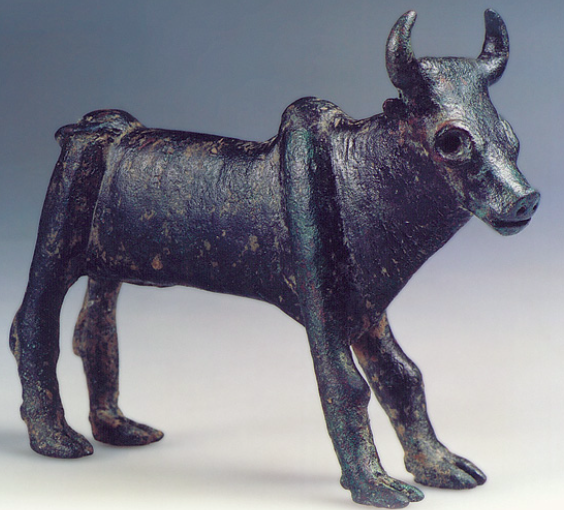
The Golden Calf in Exodus 32 is another example
- Israel, newly delivered from Egypt, so quickly turned to idolatry while Moses was on Mount Sinai.
- Aaron fashioned them a golden calf, and the people proclaimed, “This is your god, O Israel, that brought you up from the land of Egypt!” (Exodus 32:4).
- This was an early and deliberate act of apostasy—abandoning the true God for the work of their hands. In Exodus 32:8 God says “They have turned aside quickly out of the way which I commanded them.” It didn’t take them long to defect from God.
- Despite God’s deliverance from Egypt, His provisions in the wilderness, and His blessings in the Promised Land, the people continually turned to idols. Judges 2:11–12 says, “And the children of Israel did evil in the sight of the LORD… and forsook the LORD, the God of their fathers.”
I also want to mention another passage from Jeremiah 2:13, where God accuses His people of committing two evils: 1st – forsaking Him, “the fountain of living waters,” and 2nd – digging their own “cisterns—broken cisterns that can hold no water.” The result is – these worldly substitutes for God are ultimately empty and unreliable. They may seem like a solution, but they will eventually fail and leave a person spiritually empty and unfulfilled, much like a broken cistern leaves one with no water.
The New Testament also is filled with warnings on this subject. Jesus knew and predicted large numbers will turn their backs on God. He says in— Matthew 24:10 “Many will fall away…and betray one another.”
- Matthew 24:12 “Because iniquity shall abound, the love of many shall wax cold.”
- He promised in Matthew 24:13 “He that endures to the end shall be saved.” Implying that some will not endure till the end.
In the Early Church We Have Examples
1. Judas Iscariot (in John 13:27; Acts 1:25) Judas stands as the ultimate personal defector – even though he was close to Christ, yet he turned away for gain. His betrayal illustrates the inner corruption that leads to open rebellion. He was outwardly close to Christ but inwardly rebellious. John teaches (in 1 John 2:18–19) that apostasy exposes those who were never truly converted, even though they appeared to belong. He said “They went out from us, but they were not of us.” More like their presence is here but they didn’t belong.
2. From (1 Timothy 1:19–20) we learn of Hymenaeus and Alexander — Paul mentions them as those who “suffered shipwreck concerning the faith,” showing apostasy as a spiritual collapse resulting from rejecting conscience and truth. It seems that both men must have professed faith in Christ at one point, since it is their “faith” that was shipwrecked. The idea is that they had veered off course, away from God hence why Paul says he handed them over to Satan
3. Another example is Demas who once laboured with Paul (in 2 Timothy 4:10). Paul said“Demas hath forsaken me, having loved this present world.” His love for the world then replaces his love for God—a common cause of apostasy.
4. Paul’s also warns — 1 Timothy 4:1–2. that in the latter times some will depart from the faith, giving heed to deceiving spirits and doctrines of demons.” He predicts widespread doctrinal corruption and moral decay within the church before Christ’s return.
5. The Epistle to the Hebrews contain some of the most solemn warnings on this matter:
- Hebrews 2:3 says “How shall we escape if we neglect so great salvation?” Hebrews 3:12, “Take heed…lest there be in any of you an evil heart of unbelief, in departing from the living God.” Hebrews 10:26–27 “If we sin wilfully after we have received the knowledge of the truth, there remains no more sacrifice for sins.” These passages show us that apostasy is real – both then and now and highlight deliberate abandonment of the gospel as spiritual death or to shipwreck once faith according to Paul.
The question of concern is:What Causes the Heart of men and women to Turn Away from God? Why do believers defect from the true God who loved them, blessed them, and forgave them?
Our first clue is in Hebrews 3:12–13 which says “Take heed, brethren, lest there be in any of you an evil heart of unbelief, in departing from the living God. But exhort one another daily, while it is called today; lest any of you be hardened through the deceitfulness of sin.”
- The Root of Apostasy according to Hebrews Is Unbelief + Deceitfulness of sin. Unbelief results in apostasy through a spiritual process involving the hardening of the heart due to the deceitfulness of sin, resulting in deliberate and willful turning away from the living God.
- The Love of the world (2 Tim. 4:10; 1 John 2:15–17): Loving the world is in opposition to loving God. If you love the world, the love for the Father is not in you. The passage specifies what “the world” encompasses: “the lust of the flesh, the lust of the eyes, and the pride of life.” 2 Timothy 4:10 states that Demas deserted Paul because he loved the present world and went to Thessalonica possibly due to the dangers of being a Christian at that time. “The world and its desires are passing away, but the one who does the will of God remains forever” (1 John 2:17).
- Another key factor is False doctrine and deception (1 Timothy 4:1) reads, “The Spirit clearly says that in later times some will abandon the faith and follow deceiving spirits and things taught by demons. 2Such teachings come through hypocritical liars, whose consciences have been seared as with a hot iron.” This verse predicts a future where some individuals will turn away from their faith due to deception and false teaching and there’s enough of those around us today.
- Persecution and fear of suffering is another reason. In Jesus parable ( in Matthew13:18–21) He says “Listen then to what the parable of the Sower means: 19When anyone hears the message about the kingdom and does not understand it, the evil one comes and snatches away what was sown in their heart. This is the seed sown along the path. 20The seed falling on rocky ground refers to someone who hears the word and at once receives it with joy. 21But since they have no root, they last only a short time. When trouble or persecution comes because of the word, they quickly fall away. Initially, they receive the word with joy but their faith is shallow. When difficulties, trouble, or persecution arise because of their belief, they immediately give up or “fall away.”
Now that we’ve identified some of the causes of apostasy– what actions we can take to guard against shipwrecking our faith! Here are 3 suggestions to consider:
- Guard Sound Doctrine – Apostasy begins where truth is neglected. Sound doctrine is the antidote to apostasy, (2 Timothy 4:3–4) “For the time will come when people will not put up with sound doctrine. Instead, to suit their own desires, they will gather around them a great number of teachers to say what their itching ears want to hear. 4They will turn their ears away from the truth and turn aside to myths.” A church rooted in Scripture will not be easily swayed by false teaching.
- Watch for Subtle Drift – The danger of apostasy is not always in open denial, but in quiet compromises – we must pay close attention to God’s truth. Jesus said in John 8:31, “If you continue in My word, then are you My disciples indeed.” Faithfulness is not a momentary confession, but a lifelong commitment to Christ. Commit daily to the word, to prayer and to worship.
- Encourage One Another – “Exhort one another daily…lest any be hardened through the deceitfulness of sin.” (Hebrews 3:13). Fellowship and accountability guard believers from drifting in isolation. “God is able to keep you from falling and to present you faultless before the presence of His glory.” — Jude 24. Our confidence is not in ourselves but in the faithfulness of Christ who sustains His people.
Despite these sobering warnings, the New Testament assures believers of God’s power to preserve the faithful: there’s no better protection than to know that God’s power can preserve us from falling away. Philippians 1:6 says “He who began a good work in you will perform it until the day of Jesus Christ.” Hebrews 10:39 reminds us that “We are not of those who draw back unto perdition, but of those who believe to the saving of the soul.”
Conclusion:
Apostasy is not a warning to the world, but to “brethren.” Scripture warns in (Hebrews 3:12), that apostasy is real. Apostasy is gradual (Hebrews 2:1) and is possible for anyone who neglects their faith (1 Corinthians 10:12). It begins in the heart — often quietly, through spiritual coldness, unbelief, love for the world, and the withdrawal and eventual loss of fellowship with other believers.
But the good news is that God has provided a remedy. By staying vigilant, holding fast to His Word, maintaining fellowship, renewing our faith daily, and persevering in Christ, we can stand firm. God’s grace not only calls us but keeps us grounded in our faith. He is able, as Jude 24 says, “to keep you from falling, and to present you faultless before the presence of his glory with exceeding joy.”
The story of apostasy is tragic, but the story of restoration is even greater. No one is too far gone from the reach of God’s mercy. The same Saviour who warned us about falling away also promised in (John 6:37) that “him that cometh to me I will in no wise cast out.”
From the wilderness of Sinai to the churches of Revelation, God’s people have been called to remain steadfast. Let us heed the words of the writer of Hebrews (in Hebrews 10:39) which says “We are not of those who draw back unto perdition, but of those who believe to the saving of the soul.”
Let us take heed, hold fast, and help one another remain faithful —until we hear those words from our Lord: “‘Well done, good and faithful servant! You have been faithful with a few things; I will put you in charge of many things. Come and share your master’s happiness!’” (Matthew 25:21). May the Lord bless his words!